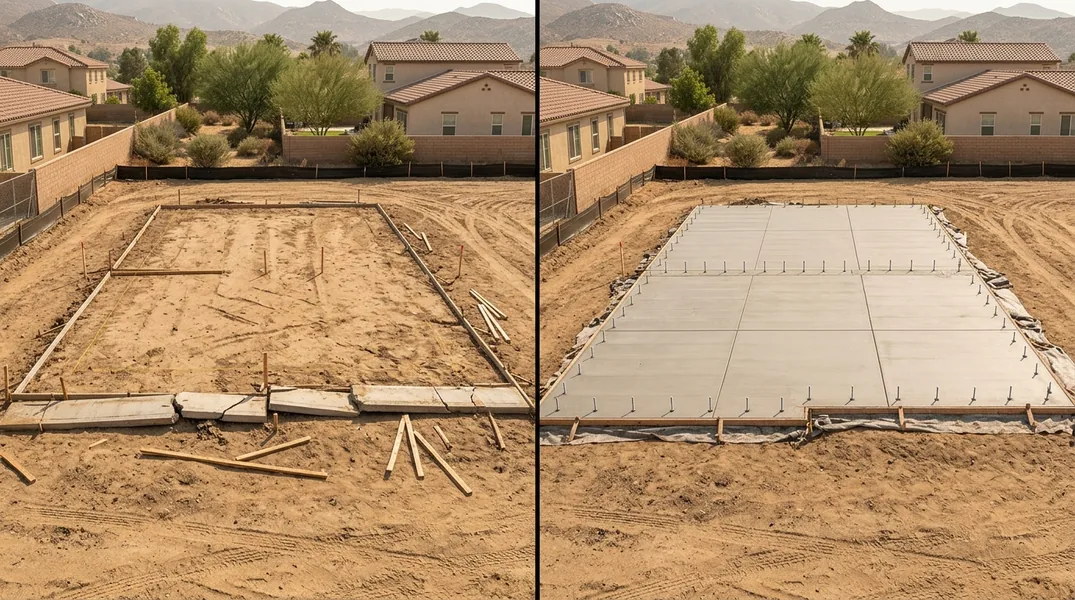
Understanding New Construction Concrete Slabs in Riverside
Buying a new home in Riverside is exciting, but it also comes with real responsibilities. One of the most critical components of any new build is the concrete foundation slab, yet many homebuyers overlook it during the final walkthrough. Unlike older homes where foundation issues may have already surfaced, new construction concrete slabs in Riverside, CA are still settling and curing, which means problems can develop quickly if the slab wasn't properly installed.
The concrete slab serves as the base for your entire home. It supports the weight of walls, flooring, and everything inside. In the Inland Empire new build market, where temperatures fluctuate significantly between seasons, concrete slabs face unique stresses. Understanding what you're looking at before you close is the best way to protect your investment and avoid costly repairs down the line.
What to Look for During Your Builder Foundation Inspection
A builder foundation inspection should be thorough and systematic. Start by walking the entire perimeter of the slab, looking at the surface from multiple angles and in different lighting. You're checking for visible cracks, uneven surfaces, and signs of settling. Bring a straightedge or a long level to test for low spots or high points. Slabs should be relatively flat, though minor variations are normal. Pay special attention to areas around doorways, windows, and where the slab meets the foundation walls.
Inside the home, inspect the concrete slab in the garage, utility areas, and any spaces where the slab is exposed or will support heavy loads. Look for cracks that are wider than a hairline or that show signs of ongoing movement. Also check for discoloration, soft spots, or areas where the concrete appears to be spalling (flaking or breaking apart). Take photos and notes of anything unusual. If you notice significant issues, request that the builder address them before closing. Many builders will make repairs if issues are documented before the final walkthrough, but they're far less likely to help after you've signed the deed.
New Home Slab Cracks: Normal vs. Concerning
Not all cracks in a new concrete slab are cause for alarm. Hairline cracks, which are barely visible to the naked eye, are extremely common as concrete cures and the slab adjusts to seasonal temperature changes. These typically do not indicate a structural problem and are cosmetic in nature. However, wider cracks, especially those that are actively growing or show signs of water seepage, warrant closer inspection and may require professional evaluation.
Cracks that run diagonally across the slab, cracks wider than one-quarter inch, or cracks that continue to grow over time are red flags. In the Riverside area, where summer heat can be intense and winters mild, concrete experiences significant thermal stress. This can cause existing cracks to expand. If you notice cracks that seem to be getting worse, or if you see cracks paired with uneven settling (one side of a crack higher than the other), contact a professional immediately. These could indicate issues with the soil beneath the slab or improper installation. The good news is that Concrete Repair & Resurfacing services can address many of these issues before they become structural problems.
Soil Conditions and Settlement in the Inland Empire
The Inland Empire's soil composition plays a major role in how new construction concrete slabs perform over time. The region has a mix of clay, silt, and sandy soils that can shift seasonally. During wet winters, soil absorbs moisture and expands; during dry summers, it contracts. This movement, called differential settling, is one of the leading causes of cracking and unevenness in new slabs. A quality builder will have conducted soil testing and adjusted the slab design accordingly, but not all builders follow best practices.
Before you close, ask your builder for documentation of soil testing and any special foundation preparation that was done. Did they compact the soil properly? Was a gravel base layer installed? Were any expansive soils removed or treated? These details matter tremendously. If the builder skipped these steps to save money, you may face settling issues within the first year or two. Understanding the soil conditions helps explain why your new slab might develop cracks even though it was recently poured. If you're concerned about settlement patterns, a structural engineer can evaluate the slab and provide recommendations for monitoring or repair.
Your Pre-Closing Checklist for the Concrete Slab
Create a detailed checklist before your final walkthrough. Document the condition of the slab with photos and measurements. Check for cracks, measuring their width and length. Look for areas where the slab is higher or lower than adjacent sections. Inspect for stains, discoloration, or signs of water damage. Test door and window frames to ensure they open and close smoothly, as settling can cause binding. Look at the garage slab especially carefully, since it often bears the weight of vehicles and is more prone to damage if installation was poor.
Walk the slab in bright daylight and again in dim lighting to catch surface irregularities you might miss otherwise. If you find issues, document everything and provide the builder with a written list before closing. Many builders will make repairs if given clear documentation and reasonable time. If the builder refuses to address significant problems, consult with a structural engineer or contact Riverside Concrete Pros at (951) 470-2469 to get a professional assessment. You may decide to negotiate a credit at closing or request that repairs be completed before you take possession.
When to Call a Professional: Getting a Free Estimate
If you've identified potential issues with your new construction slab and want expert guidance, don't wait until after closing. A professional evaluation can save you thousands in future repairs and give you leverage during negotiations with the builder. Riverside Concrete Pros specializes in assessing concrete foundation slabs and can identify problems that untrained eyes might miss. Whether you're concerned about cracks, settling, or the overall quality of the installation, a professional inspection provides peace of mind and documentation.
Getting a free estimate or professional assessment is straightforward. Contact Riverside Concrete Pros at (951) 470-2469 or visit the website to request a consultation. During an assessment, a professional can determine whether cracks are structural or cosmetic, evaluate settling patterns, and recommend next steps. If repairs are needed now or in the future, you'll have expert guidance on the best approach. Whether you're in Riverside or elsewhere in the Inland Empire, having a professional in your corner before closing is one of the smartest decisions you can make as a new homebuyer.
Looking for a professional concrete contractor in Riverside? Riverside Concrete Pros responds fast for all your concrete needs.
Get a Free QuoteOur services: Concrete Driveways · Concrete Patios · Stamped & Decorative Concrete